By Emmanuel Patrick Laku | Sports Hunter South Sudan | 22nd July 2026
Every football match depends on the decisions of the referee, yet their stories are rarely told. Behind every whistle is a journey of sacrifice, discipline and resilience.
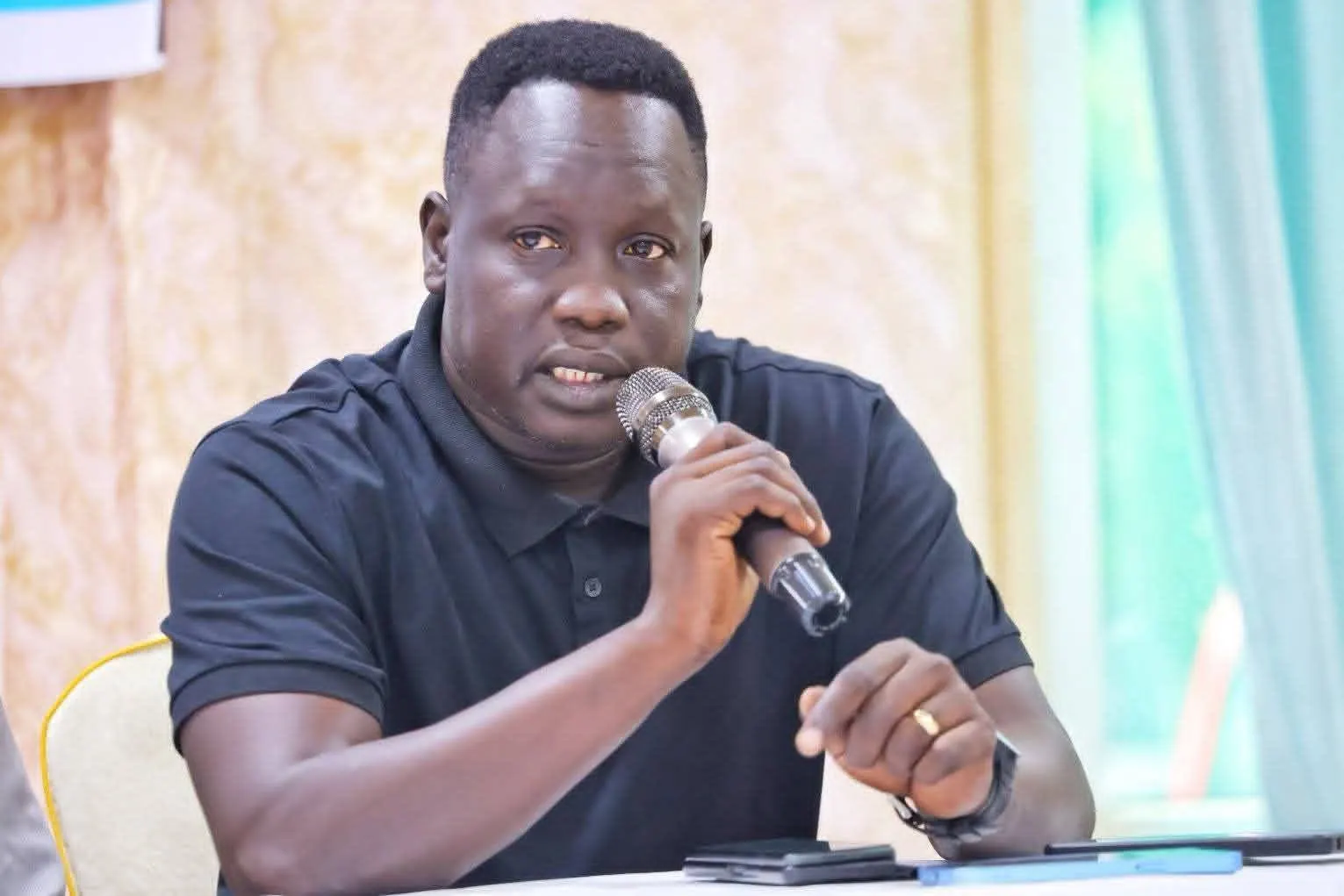
For National Referee Santino Abalgak Malual Majok, popularly known as Sam Santo, that journey began in Wau in 2012, where he became one of South Sudan's youngest referees. More than a decade later, his ambition has grown far beyond domestic football—his ultimate goal is to officiate at the FIFA World Cup.
In this exclusive interview with Sports Hunter South Sudan, Santino speaks to Emmanuel Patrick Laku about his rise through the ranks, the financial struggles he overcame, the lessons he has learned from senior officials, and what must be done to develop the next generation of South Sudanese referees.
Sports Hunter: First, please introduce yourself to our readers and tell us about your journey into football refereeing.
Santino Abalgak: Thank you for giving me this opportunity. My name is Santino Abalgak Malual Majok, also known as Sam Santo. I started my refereeing journey in Wau, Western Bahr el Ghazal State, in 2012 and, at the time, I was the youngest referee in South Sudan.
I officiated matches in the first, second and third divisions under the Wau Football Association. In 2015, I moved to Juba for government work. Although work commitments initially limited my participation, I officially registered with the Juba Local Football Association in 2021, where I received tremendous support from fellow referees, instructors and football administrators. Their encouragement helped me grow until I became a national referee.
Sports Hunter: What inspired you to become a referee, and when did you realise officiating was your calling?
Santino Abalgak: Honestly, I never planned to become a referee. It was retired national referee and current instructor Isaac Lual who encouraged me to join. At first, I resisted, but he kept motivating me until I accepted.
Once I entered refereeing, I developed a real passion for it. I realized that this was the path I wanted to follow, and since then my dream has been to reach the highest levels of officiating in Africa and the world.
Sports Hunter: Before becoming a referee, what was your relationship with football?
Santino Abalgak: I was a football player with Hai Dinka Club in the Second Division of the Wau Football Association. Playing the game gave me a better understanding of football and helped shape my approach as a referee.
Sports Hunter: What were the biggest challenges during your early years in refereeing?
Santino Abalgak: The financial challenges were enormous. Buying refereeing equipment was very difficult. I even sacrificed my school breakfast money and worked as a boda boda rider in Wau so that I could pay for transport to training sessions and matches.
There were also challenges dealing with players and supporters, but I always reminded myself of one thing: never give up. That mindset has carried me throughout my career.
Sports Hunter: What is the biggest challenge facing you today?
Santino Abalgak: At this stage of my career, I don't focus on challenges. I believe in myself, I trust God, and I continue working hard every day to improve.
Sports Hunter: Referees often face criticism from players, coaches and supporters. How do you deal with that pressure?
Santino Abalgak: Criticism is part of football. I always try to remain calm, humble and confident. My responsibility is to apply the Laws of the Game with fairness and integrity. If I make a mistake, it is never intentional because referees are human.
The important thing is to be honest, treat everyone with respect and continue learning.
Sports Hunter: What lessons have experienced referees taught you?
Santino Abalgak: They taught me the importance of personality, confidence and consistency. A referee must enforce the laws firmly while respecting players, coaches and supporters.
Good communication and humility are just as important as knowing the rules.
Sports Hunter: How important are fitness and continuous learning in modern refereeing?
Santino Abalgak: They are essential. Fitness allows referees to stay close to play, maintain the best viewing angles and make accurate decisions. But physical preparation alone is not enough.
Referees must continue studying the Laws of the Game because football keeps evolving. Players become better every season, so referees must improve as well.
Learning should never stop.
Sports Hunter: What has been the most memorable match of your career?
Santino Abalgak: Officiating the South Sudan Cup final between El Merriekh Bentiu and Al Ghazala is the most memorable moment of my refereeing career.
National referee Santino Abalgak Malual Majok (third from the right) and fellow match officials pose for a group photo with the captains of El Merriekh SC Bentiu and Al Ghazala SC Wau ahead of the 2025/2026 South Sudan Cup Final.
Photo Credit: Simple Kiddo
Sports Hunter: What are the biggest differences between officiating local matches and elite competitions?
Santino Abalgak: Elite football is much faster and more tactical. At local level, mistakes are often accidental, but at higher levels players make calculated tactical decisions.
Referees must anticipate situations earlier, maintain better positioning and make quicker decisions.
Sports Hunter: What does South Sudan need to produce more quality referees?
Santino Abalgak: The South Sudan Football Federation leadership has supported referees through FIFA courses and workshops, and we appreciate that.
However, we still need more investment in referee development, modern equipment, communication systems, electronic flags, regular fitness programmes and continuous education.
Grassroots referee development is also very important if we want to produce more FIFA referees in the future.
Sports Hunter: Which referee inspires you the most?
Santino Abalgak: Michael Oliver is my favourite referee. I admire his calm personality, fairness, confidence and the respect he shows players. He manages matches with integrity while maintaining excellent communication.
Sports Hunter: What are your ambitions?
Santino Abalgak: My dream is much bigger than becoming a national referee. I want to officiate in the CAF Champions League, the Africa Cup of Nations and, ultimately, the FIFA World Cup.
That dream will only become reality through hard work, discipline and total commitment.
Sports Hunter: What advice would you give to young South Sudanese who want to become referees?
Santino Abalgak: Dream big. Refereeing requires commitment, discipline and patience. Challenges will come, but never give up.
I also encourage more young women to join refereeing because there are many opportunities available through CAF and FIFA.
Sports Hunter: What support do football stakeholders need to provide referees?
Santino Abalgak: We need more FIFA and CAF workshops, better refereeing equipment, communication systems and video analysis tools to help officials review performances and improve consistency.
We should also strengthen grassroots recruitment so young referees have a clear pathway from local football to international competitions.
Sports Hunter: Finally, when people watch you officiate, what do you hope they remember?
Santino Abalgak: The best compliment for a referee is when people remember the football more than the officiating. But if they remember me, I hope they remember a referee who officiated with fairness, integrity, consistency and respect.
I want every match I officiate to be decided by the players—not by the referee.
Sports Hunter: Santino, thank you for sharing your inspiring journey and valuable insights with Sports Hunter South Sudan. We wish you continued success in your refereeing career and hope to see you representing South Sudan on the CAF and FIFA stages in the years ahead.
Santino Abalgak's journey is one of determination, sacrifice and ambition. From using his school breakfast money to buy refereeing equipment and working as a boda boda rider to support his passion, he has risen to become one of South Sudan's promising national referees.
His story reflects the challenges many young officials face, but it also highlights the opportunities that exist through hard work, education and perseverance.
As South Sudan continues to invest in football development, referees like Santino represent the future of officiating in the country.
With his sights firmly set on CAF competitions and the FIFA World Cup, he hopes not only to fulfil his own dream but also to inspire the next generation of South Sudanese referees to believe that the world's biggest stages are within reach.
Interview conducted by: Emmanuel Patrick Laku
Founder & Editor, Sports Hunter South Sudan
Telling South Sudan's Sporting Stories